We recently held a conference in Libreville, Gabon with major added benefits. We hosted several whisky tastings and a whisky dinner. We conducted hours of staff training. All tastings and dinners were well attended and often overcrowded. In our free time we flew, by helicopter, to the equator and took pictures to prove it. I have the picture of our group standing next to the lone red concrete column that marks the exact spot between the two hemispheres. We jumped from the Northern hemisphere to the Southern hemisphere many times. This raised several shallow remarks and some crude chuckles. We flew to a deserted stretch of land and walked along the beach to spend the rest of the day on a private beach where we conducted whisky tastings and training with staff from the various West African countries. What a setting!
Our lunch was fresh seafood, followed by lazing in the sun on stretch beds and later, some people choose to cool down in the sea. I suppose they were refreshing. The 'now very much more knowledgable' staff conducted tastings back to our group. Some were great, others simply brilliant with an obvious flair for public speaking. We were happy in the knowledge that all participants had learnt everything they needed to conduct tastings in their markets. We had an awesome time together and I will always have great memories of this trip because of the warmth of the people.
We will see results from people who live passionately and love what they do. We wish each and every one of you, our colleagues in West Africa the very best and that this time together will return rewards in your future. It was WOW! Thanks to Jean-Do and Joel for arranging the gathering.

Thursday, 11 August 2011

Thursday, 7 October 2010
NEW Jameson Select Reserve

One Small Batch Grain
and Potstill Blend.
One Hand Picked
Barrel Sellection.
One Single Distillery.
Once a Year.

Jameson Select Reserve is the newest expression from the Jameson Single Distillery, which has been hand selected by the *Four Jameson Masters to deliver an extremely rich and luxurious taste experience. A rare selection of small batch grain whiskey, not found in any other Jameson whiskey, combined with a high proportion of single Irish pot still whiskey aged up to 12 years is what makes the Select Reserve blend so bold and powerfully smooth.
The select grain whiskey triple distilled in small batch quantities is made on just one occasion each year and is put away to mature in the Jameson Single Distillery.
Oloroso sherry and bourbon oak casks are chosen by the Master Blender who personally selects and samples every single one. The casks he judges to be at their perfection are put aside and carefully blended together to present Jameson Select Reserve in a taste experience where the trademark Jameson notes of toasted wood, spice and vanilla can be found with unique creamy luscious touches of exotic fruits.
Tasting Characteristics:
Aroma: Rich and full, developing into the succulent sweetness of exotic fruits like nectarines, apricot and papaya.
Taste: A burst of rich flavours combine to produce a creamy, luscious taste experience. The special fruity sweetness from the grain remains consistent, while the waves of vanilla, toasted wood and spices roll through.
Finish: An incredibly long finish with fruit and wood spices lingering in perfect proportion delivering an extremely rich and luxurious taste experience.
* The Four Masters are: The Master Distiller - Barry Crockett, The Master Blender - Billy Leighton, The Master of Maturation - Brendan Monks and The Master of Whiskey Science - David Quinn.

Friday, 3 September 2010

November 2010 is whisky month with the annual 'FNB Whisky Live Festival' returning for its eighth year showcasing whiskies from around the world in Cape Town and Johannesburg.
The festival remains the largest and most exciting whisky show of its kind in the world. The festival is in the following centres and dates: The Cape Town International Convention Centre from Wednesday, 3 November to Friday, 5 November and at the Sandton Convention Centre from Wednesday, 10 November to Friday, 12 November.
- Whisky Pairing Zone with fresh oysters, salmon, handmade chocolates, shortbread, Italian meats and French cheeses.
- Other opportunity to interact with the people behind the brand includes: The Macallan Maturation zone, Glen Grant Distillation zone and Schweppes Art of Whisky Cocktail Making zone.
- Whisky workshops offering the best learning experience/best value for money at the show by visitors.
- The popular Lexus Connoisseur’s Experience - The Ultimate Guided Tour offering festival-goers the opportunity to be chauffeur driven to the festival and then savour exclusive and rare whiskies generally not available to the public while joining a personal guide on a tour of the distillery stands. The experience will also include light dinner, in the hospitality lounge.
- This year those who cannot get hold of a Lexus Ultimate Guided Tour ticket can have the benefit of tasting a selection of whiskies unavailable in the tasting hall in the comfort of a stylish lounge. The Whisky Lifestyle Lounge offering the perfect exclusive forum for client entertainment or simply networking and meeting up with like-minded friends. A light dinner is included. Tickets cost R495.00/person which includes your Tasting Hall entry ticket.
Tickets
Various exciting new tickets options for the Tasting Hall, as well as the other features, attractions and workshops are available from Webtickets from mid-September 2010, which can be accessed via the Whisky Live Festival website (Whisky Live Festival)
The FNB Whisky Live Festival promotes responsible drinking. No persons under the age of 18 years old will be allowed into the Tasting Hall, and dedicated driver tickets are available. Discounted food vouchers and a bottle of Valpre mineral water are included in the ticket price, and taxis will be on hand to ensure that everyone in your party is able to have a good time. Part of the proceeds will continue to be donated to The Foundation of Alcohol Related Research.
Friday, 6 August 2010
Jameson Reserves

WHAT MAKES THESE WHISKEYS EXTRA SPECIAL?
When the 4 Masters come together to make the best that Jameson has to offer, 3 distinct criteria need to be met to ensure these whiskeys are worthy of the name Reserve…
HIGH POT STILL CONTENT
All whiskeys permitted to bear the Reserve name must firstly have a high pot still content, courtesy of the yeast fermented mash of malted and unmalted barley produced in traditional copper pot stills. This is where the Master of Whiskey Science and the Master Distiller’s attention to detail ensures that the distillates used for blending with other whiskeys have a characteristically rich, full bodied flavour.
LIMITED STOCKS
All our Reserve whiskeys are significantly aged and these are limited in stock. They are carefully managed in order to best utilise them and create truly extra special whiskeys, namely Jameson Reserves.
HAND PICKED CASKS
In addition to the unparalleled personal attention the Reserves enjoy throughout the entire production process, the final element that helps to compose a true Reserve whiskey is all about the casks and the distillates used. Jameson takes a lot of pride in ensuring that our cask quality is world class and that unlimited resources are available to ensure the finest casks are commissioned and selected for the individual whiskeys. Given the small quantity these Reserve whiskeys are produced in, a sub standard cask can be the undoing of all the expertise that has preceded this stage in their creation. Exhaustive steps are taken by the Master Blender and Master of Maturation to hand pick and sample each wooden cask to assess their suitability for blending, maturing and vatting whiskeys.
RESERVE PREMIUM
This is the critical factor in a balancing act that can add either ‘light’ and ‘shade’ in varying hues to the overall picture of the whiskey(s) profile. For example, with Jameson Gold Reserve, virgin oak barrels are used with certain distillates, as the fresher the barrel, the more the whiskey reacts with the wood itself, which helps develop a more robust, complex flavour. To moderate the effect the casks have on a whiskey, other distillates from second or third fill barrels may be married with this to temper the exuberance and mellow the taste, whilst oloroso casks will contribute a sweeter, sherried accent and finish. In the words of Jameson Master Blender, Billy Leighton, “The distillates and casks you leave out of a Reserve blend are almost as significant as those you put in.”
Together these 3 criteria exert a varying but essential influence depending on the type of whiskey being made, allowing it to develop into something that is more than the sum of its parts; a Jameson Reserve.
JAMESON . . . TOO SPECIAL TO RESERVE .

Like many of the finer things in life, the Jameson Reserves were created for one reason only… to be enjoyed! We believe that our Reserve whiskeys are very special indeed, although not too special to reserve just for formal occasions or events. Given the years it takes to distil, blend and mature these Jameson Reserves, life really is too short, so any opportunity to share them in the good company of friends or family should always be seen as a special occasion…
The enjoyment of Jameson Reserve Whiskeys is a threefold experience, where the subtleties of the flavour spectrum are revealed in the nuances of its nose, taste and finish… But what are these? Very simply these are three sensory stages that greatly enhance the appreciation and understanding of the differences between each of these Reserve whiskeys.
NOSE
Firstly, the ‘nose’ is the characteristic aroma that each Reserve releases and is best appreciated through a rounded glass with a tapering end that guides the aroma towards the top. Terms to describe the nose can vary from light to rich, woody, spicy and aromatic or mellow, to simple and complex. These individual traits become more pronounced with the addition of a little water, which brings the full bouquet of the spirit to the fore. As with all of the Reserves, their pot still character ensures the nose of each is rich and full bodied, whilst its colour or hue will suggest the types of cask, such as sherry, bourbon or port that they were matured in.
TASTE
As the first sip is held in the mouth, the numerous, acutely sensitive taste buds of the tongue differentiate the lavish taste profile of the whiskey. The tip of the tongue is where we detect sweetness and at the sides a more savoury flavour. As a rule, the finer the whiskey the more accents of flavour are awakened in the mouth as a whole, rather than specific areas of the tongue. ‘Taste’ is often described in terms of hints of sherry richness, spicy, nutty, vanilla, dark chocolate, woody, honeyed, oily and malty and all the Reserve whiskeys will stimulate the taste buds to enjoy a number of these flavours.
FINISH
Having savoured the nose and taste, the ‘finish’ refers to the more defined feeling of flavour that is left in the mouth and may be noticeably different from the initial sip. This is the finale and the encore, depending on whether the whiskey has a long, lingering finish or ends with a shorter more robust flavour. This finish or aftertaste may leave either a sweet, dry or smooth essence on the tongue. Once again the Reserves each have a finish of generous proportions and a lavish spectrum of bighearted flavours.
Thursday, 29 July 2010
The Irish were the first to invent whiskey
Irish whiskey has a long and distinguished history, dating back to 500 AD. The first Irish whiskey predates Scotch whisky by over seven hundred years.
Whiskey was invented in Ireland.
Irish whiskey has a long and distinguished history, dating back to 500 AD. The first Irish whiskey predates Scotch whisky by over seven hundred years.
The exact origins of whiskey making are unclear. However, it is believed to have been started by Irish monks in the sixth century. They found out about distilling during their missionary works in the Far East, where it was used in the making of perfume. The monks quickly discovered a somewhat different use for the process: they found that if a mash of barley and water was fermented with yeast, and then heated in a pot still, the alcohol could be separated and retained. The resulting drink, furthermore, had wondrous powers. They named it Uisce Beatha, or The Water of Life.
At first this elixir was used as a medicine. If you had eaten bad food you drank some and killed the poisonous bacteria in your stomach. If you cut yourself you would clean the wound with it to avoid infection. If you drank too much of it you were moved to an altered state – no wonder it was first thought to be the fifth element.
 FIGURE 1 Traveling Irish monks discover the Alembic clay pot still used by the Arabians to distill perfumes and aromatics. in the 6th century AD. The monks discovered a better use for its process.
The WORD
The soldiers of King Henry II of England, on one of their first visits to Ireland in the twelfth century, were greatly taken by the local distillation. They had, however, some difficulty pronouncing the words uische beatha, so they simply took the first word and anglicised it, pronouncing it fuisce and later whiskey, giving us the word we use today.
Famous whiskey, famous people
French brandy was Irish whiskey’s only rival as the most popular drink
It wasn’t long before the fame of Ireland’s uisce beatha had spread throughout the civilized world, and became associated with many of history’s most famous names. Queen Elizabeth I was known to be partial to Irish whiskey, to which she had been introduced by Sir Walter Raleigh. Tsar Peter the Great of Russia declared, “…of all the drinks, the Irish spirit is the best.”
By the latter part of the nineteenth century, there were 160 whiskey distilleries in Ireland, with over 400 brands of Irish whiskey in the USA alone. Irish whiskey had become the most popular drink in the known world, its only serious rival being French brandy.

FIGURE 2 By the 17th and 18th century Irish whiskey was being exported to the four corners of the world and appreciated as the finest spirit the world had to offer – The Tsar of Russia, Peter the Great, remarked “… of all the drinks, the Irish is best.”
The renaissance of Irish Whiskey
During the first half of the century, a combination of circumstances, including the Irish war of Independence, a trade war with Britain and the Prohibition Era in the United States, led to the decline of Irish whiskey.
Scotch and Bourbon brands filled the void left by the absence of Irish whiskey from the International market. In Ireland, however, pub-goers stayed loyal to their favourite drink. They appreciated the superior taste of brands such as Jameson and Paddy, Bushmills and Powers.
The Irish people remained loyal and passionate
Today Irish whiskey is the fastest growing whiskey category in the world, and this phenomenal growth in popularity is expected to accelerate.
 Figure 3: The Royal Commission of 1909, the Irish War of Independence 1919, the Irish Civil Ware 1921 and the American Prohibition 1919 all account for the downfall of Irish Whsikeys international dominance as the drink of choice.
THE DIFFERENCE BETWEEN WHISKEYS.
The general distinction between Irish whiskey, Scotch whisky and American whiskey begins with the raw materials used.
Firstly, Irish whiskey uses malted and unmalted barley. Scotch whisky uses malted barley and other cereals. American whiskey uses 51% corn, 19% barley and 30% other cereals.
The second difference occurs at the malting stage. Irish malt is dried in a closed kiln and ‘peat’ smoke is not used to dry the malted barley. Scotch malted barley is dried in an open kiln and ‘peat’ smoke is used in varying degrees to dry the malted barley. In the American whiskey industry ‘green’ cereals are used. The cereals are not dried after germination but immediately mashed to extract the sugars.
The third difference occurs at distillation i.e. the number of times the ‘wort’, or beer like liquid, is distilled. The rule is general and with few exception is exact. American whiskey is distilled once, Scotch twice and Irish whiskey is tripled distilled. Filtering, as is the case with Tennessee whiskey does not make a purer whiskey, but is done to return flavour to the whiskey lost due to multiple use of casks for ageing. In Bourbon County it is illegal to use a barrel more than once for ageing purposes but not in Tennessee and filtering is required.

FIGURE 4 The general distinctions between Irish whiskey, Scotch whisky and American whiskey and the different arts to achieve different flavours.
TYPES OF IRISH WHISKEY.
IRISH POT STILL WHISKEY
Irish Pot Still Whiskey is made from a mixture of malted barley, barley & crystal clear water and is distilled three times in copper pot stills. It is characteristically full bodied, smooth, spicy and flavoursome. The character of Jameson Irish Whiskey is derived from triple pot still distillation.
HOW IRISH WHISKEY IS MADE.
THE BARLEY
The secret of making Irish whiskey does not begin in the Distillery but in the fields and rivers of Ireland. The rich soil and soft climate of Ireland provides for an abundance of the finest natural ingredients of: Pure Irish water from Ireland’s clear crystal rivers, Choice Irish barley from Ireland’s rich farmland. These natural ingredients are joined together through the time-honoured crafts of distillation & maturation to become the fine Irish whiskey.
 FIGURE 5 The rich soil and soft climate of Ireland provides for an abundance of the finest natural ingredients.
MALTING THE BARLEY
The paradox of barley is that it doesn’t contain fermentable sugar but only starch. Early distillers discovered that if barley is allowed to sprout under spring-like conditions for a few days and then dried, the amount of alcohol subsequently obtained from brewing and fermentation is vastly greater than normal. Barley which has gone through this "Malting" process is called Malted barley. Malted barley is barley that has been allowed to sprout for a few days and then dried. If 100% malted barley is used in a whiskey, it is called a Malt Whiskey. If a whiskey is made from a blend of malted and grain whiskeys, it is known as a Blended Whiskey. In Ireland the malted barley is dried in closed ovens, called kilns, and away from the direct heat. This means that no smoke comes into contact with the grains of malted barley, allowing the natural flavour to shine through into the final whiskey.
In Scotland, malted barley is generally dried over an open peat fire allowing smoke to penetrate the grains. This emparts a distinct smoky flavour to the final Scotch whisky.
MILLING
This is the grinding of both the malted and un-malted barley together into a coarse flour-like substance called grist.
 Figure 6: Barley is harvested, soaked in water to trigger germination, then dried, becoming malted bareley and finally milled into a rough flour call grist.
MASHING
The Grist is mixed with hot water at a temperature of 63 degrees in a large vessel called a Mash Tun. During this process starches are converted into fermentable sugars. The mashing process is complete when a hot sweet liquid called ‘wort’ is drawn from the mash tun.
FERMENTATION
Fermentation is a natural process that occurs when yeast and sugar come in contact with each other to produce alcohol. Liquid yeast is introduced to the liquid wort and the process of fermentation begins in large vessels called ‘Wash Backs’. The result of this process is another type of liquid called ‘wash’, containing approximately 8% alcohol. The wash is sent to the Still House, Distillation, the heart of the process of making Irish whiskey.
 Figure 7: The "Grist", together with 60 degree water, is poured into the mash tun to extract the sugars. The resulting sweet 'Wort' is transferred to the 'wash back'. Yeast is added and fermentation begins. The resuly is similar to beer at 8.5% alcohol by volume called the 'Wash'.
DISTILLATION
The method of Distillation represents the central difference between Irish whiskey and other whiskies. Distillation is the process of separating alcohol from water. Alcohol has a lower boiling point than water (78 degrees) and evaporates first. The alcoholic vapours are condensed back into liquid and collected. Irish whiskey is triple distilled to ensure maximum smoothness and finesse. Scotch and Bourbon whiskies are generally only distilled twice. Every step in the triple distillation process is guided by the Master Distiller. Irish Whiskey passes through 3 distinct pot stills for distillation; namely: The Wash Still, Feint Still & Spirit Still.
 Figure 8: The 'Grist', together with the 60 water is poured into the 'mash tun' to extract the sugars. The reesulting sweet 'wort' is tranferred to the 'washback' (also known as the fermentation tank). Yeast is added and fermentation begins. This beer, known as 'wash' at 8.5% is transferred to the first postill known as the wash still. After this first distillation the spirit clear as water at 23% ABV.
After the final distillation, the spirit is colourless and the alcoholic strength is 80% alcohol by volume. The Spirit Safe monitors the quality of the spirit after the final distillation before it goes to maturation. The spirit is reduced to 63% alcohol by volume with pure spring water, before filing into cask.
Maturation is the mellowing and ageing of spirit in oak casks. While the whiskey matures, there is a complex interaction between the whiskey, natural wood extracts and the air, which breathes through the wood of the cask, giving a superb, mellow bouquet to the whiskey.
 Figure 9: The spirit is cut to retain only the better alcohols, then matured in oak casks to mellow and interact with the wood extracts and micro- climate around the cask.
Irish whiskey is matured for years in vast, dark, aromatic warehouses where it rests in fine oak casks, which have previously held Bourbon and Oloroso Sherry. Each year, a small percentage of whiskey is lost in evaporation, and this is called “The Angel’s Share”.
Irish whiskey prefers to use casks that have been seasoned by having had one previous inhabitant - the Sherry and Bourbon leaches out the stronger tannins and oak extracts leaving the wood in perfect condition for the maturation of Jameson Irish Whiskey.
The 6 main stages in the making of Irish whiskey Is malting 21 days, milling 1 day, mashing 2 days, fermentation 3 days, distillation 7 days and maturation the number of years required by that product.
The growth enjoyed by Irish whiskey in the 1960s meant that expansion of facilities became necessary. In 1975, production was moved to the Midleton Distillery, Co. Cork. The new Distillery has remained true to the methods and standards established by John Jameson. Today, the Midleton Distillery is acknowledged as one of the finest whiskey distilleries in the world.
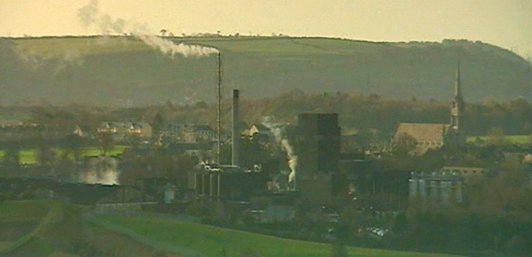 FIGURE 10 John Jameson joins John Powers & sons and the Cork Distilleries Company to the Irish Distillers Group - The Midleton Distillery established in County Cork in 1965. IDL becomes part of Pernod Ricard in 1996.
Today, Irish whiskey combines the traditions of the past with the expertise of the present. The Master Distiller, oversees the sequence of triple distillation in copper pot stills to ensure a final spirit of a smooth and delicate character. This spirit will become Irish Whiskey after many years of maturation.
FURTHER NOTES TO MATURATION
Irish whiskey, by law, must be left to mature for a minimum of three years. In practice maturation is much longer, with Jameson maturing for between 5 - 7 years. Maturation is carefully monitored over the years and when it is complete the whiskey is ‘nosed’ by the Master Blender to ensure quality. The Master Blender supervises the bringing together of as many as 300 casks in a single ‘vat’. The final Irish whiskey is reduced with de-ionised water to typically 40% Alcohol By Volume (ABV) or 43% ABV This whiskey is left to ‘marry’ before it can be called forward for is bottling.
The coopers lay the casks to rest in vast, dark, aromatic warehouses. The slow passing of time and the seasons are the essential ingredient in maturation. Finally, the Master Distiller tastes the final product - Irish whiskey. In Scotland this rests with the Master Blender.
 Figure 11. Irish Whiskey production process
WHAT MAKES IRISH WHISKEY DIFFERENT?
TRIPLE DISTILLATION, SMOOTHER TASTE.
Irish whiskey brands such as Jameson and Powers are distilled three times, in traditional copper pot stills. This guarantees their smooth taste and absolute purity. Most Scotch whisky, by contrast, is distilled just twice. Bourbon is usually distilled only once. This triple distillation is the hallmark of the great Irish whiskeys.
NO SMOKEY TASTE
The malt for Irish whiskey is dried in a closed-kiln so that the grain is dried by clean hot air. This allows the subtleties of the malt to come through. In Scotland, open peat fires are used, and this imparts a smokey flavour to the barley. This smokiness is markedly absent from distinguished Irish whiskeys such as Jameson and Power or Irish Single malt whiskey, such as Bushmills malt 10-year-old whiskey.
MELLOW FLAVOUR
Irish whiskey is produced primarily from barley (both malted and unmalted) and pure clean water. It is aged in used oak casks, which ensures a mellow flavour and a golden hue. Blended Scotch whisky uses a mix of barley and other cereals. The main ingredient in Bourbon, by contrast, is corn. Bourbon is aged in new casks, giving it a heavy sweetish flavour. Irish whiskey is drier and subtler.
THE DIFFERENT ARTS
Every drop of an Irish whiskey brand is produced in its own distillery.
In Ireland, distilling is considered the important art, while in Scotland, blending is paramount. In Scotland, a blender may buy “fillings” from as many as thirty or forty different distilleries. This produces the typical “blended” Scotch whisky. Every Irish distiller’s whiskey is created in one of our own distilleries, where the quality of every drop can be controlled from start to finish.
THE SPELLING
Perhaps one of the most obvious differences is in the spelling of the product. In Ireland and America whiskey is spelt with the ‘e’, whereas in Scotland and Canada it is whisky. All countries in the world spell the plural of whisk(e)y as whiskies and it is only Ireland who spells it whiskeys.
 Figure 12: Irish barley, pure water & oak casks contribute to Irish Whiskeys mellowness. The lack of smoke, triple distillation and the total control of production of all the Irish Whiskeys in one single distillery ensures the quality of Irish Whiskey.
JJ&S ESTABLISHED SINCE 1780
 Jameson is the largest selling Irish whiskey in the world and is also the largest selling whiskey in Ireland.
When John Jameson founded his famous distillery in Bow Street, Dublin in 1780, Dublin was the second largest city in the British Empire. Jameson was a man of pioneering spirit who saw the potential for a uniquely Irish product.
He encouraged Irish farmers to grow the type of barley best suited to the making of whiskey. Such was the success of his initiative that by the end of the nineteenth century, John Jameson’s Three Star whiskey was known throughout the civilised world. John Jameson’s efforts are still in evidence today, as Jameson is now the top selling Irish whiskey worldwide.
Jameson’s international reputation and popularity is due in part to its exceptionally smooth, triple-distilled taste. In 1996, Jameson became the fastest growing international spirit brand achieving sales of over one million (nine litre) cases.
The characteristic smooth taste is a feature of the full range of Jameson whiskeys. Jameson 1780 is a twelve-year-old premium whiskey with a distinctive mellow flavour. This derives from the use of sherry wood during its twelve years maturing. Jameson eighteen-year-old is a super-premium whiskey with rich voluptuous flavours of sherry matured and bourbon casks.
 Figure 13: Jameson is the fastest growing International whiskey. Jameson’s reputation and popularity is due in part to its exceptional smooth, triple distilled taste.
HOW IRISH WHISKEY SHOULD BE SERVED.
The smooth round taste of Irish whiskey means that it can be enjoyed in almost any form.
Here are some of the more common ways to enjoy Ireland’s national spirit: with water and ice; on the rocks; on its own; with a mixer such as: Ginger Ale, Appletizer, half apple juice half sparkling or soda water with a twist of lemon peel; in Cocktails; as a whiskey sour; as a shooter with lime or passion fruit – the ‘mix-ability’ of Irish whiskey is endless – the purity and smoothness guaranteed.
 Figure 17: The ‘mix-ability’ of Irish whiskey is endless. the purity & smoothness guaranteed.
The End - Enjoy your drinking in moderation as always.
Irish whiskey has a long and distinguished history, dating back to 500 AD. The first Irish whiskey predates Scotch whisky by over seven hundred years.
Whiskey was invented in Ireland.
Irish whiskey has a long and distinguished history, dating back to 500 AD. The first Irish whiskey predates Scotch whisky by over seven hundred years.
The exact origins of whiskey making are unclear. However, it is believed to have been started by Irish monks in the sixth century. They found out about distilling during their missionary works in the Far East, where it was used in the making of perfume. The monks quickly discovered a somewhat different use for the process: they found that if a mash of barley and water was fermented with yeast, and then heated in a pot still, the alcohol could be separated and retained. The resulting drink, furthermore, had wondrous powers. They named it Uisce Beatha, or The Water of Life.
At first this elixir was used as a medicine. If you had eaten bad food you drank some and killed the poisonous bacteria in your stomach. If you cut yourself you would clean the wound with it to avoid infection. If you drank too much of it you were moved to an altered state – no wonder it was first thought to be the fifth element.

The WORD
The soldiers of King Henry II of England, on one of their first visits to Ireland in the twelfth century, were greatly taken by the local distillation. They had, however, some difficulty pronouncing the words uische beatha, so they simply took the first word and anglicised it, pronouncing it fuisce and later whiskey, giving us the word we use today.
Famous whiskey, famous people
French brandy was Irish whiskey’s only rival as the most popular drink
It wasn’t long before the fame of Ireland’s uisce beatha had spread throughout the civilized world, and became associated with many of history’s most famous names. Queen Elizabeth I was known to be partial to Irish whiskey, to which she had been introduced by Sir Walter Raleigh. Tsar Peter the Great of Russia declared, “…of all the drinks, the Irish spirit is the best.”
By the latter part of the nineteenth century, there were 160 whiskey distilleries in Ireland, with over 400 brands of Irish whiskey in the USA alone. Irish whiskey had become the most popular drink in the known world, its only serious rival being French brandy.

FIGURE 2 By the 17th and 18th century Irish whiskey was being exported to the four corners of the world and appreciated as the finest spirit the world had to offer – The Tsar of Russia, Peter the Great, remarked “… of all the drinks, the Irish is best.”
The renaissance of Irish Whiskey
During the first half of the century, a combination of circumstances, including the Irish war of Independence, a trade war with Britain and the Prohibition Era in the United States, led to the decline of Irish whiskey.
Scotch and Bourbon brands filled the void left by the absence of Irish whiskey from the International market. In Ireland, however, pub-goers stayed loyal to their favourite drink. They appreciated the superior taste of brands such as Jameson and Paddy, Bushmills and Powers.
The Irish people remained loyal and passionate
Today Irish whiskey is the fastest growing whiskey category in the world, and this phenomenal growth in popularity is expected to accelerate.

THE DIFFERENCE BETWEEN WHISKEYS.
The general distinction between Irish whiskey, Scotch whisky and American whiskey begins with the raw materials used.
Firstly, Irish whiskey uses malted and unmalted barley. Scotch whisky uses malted barley and other cereals. American whiskey uses 51% corn, 19% barley and 30% other cereals.
The second difference occurs at the malting stage. Irish malt is dried in a closed kiln and ‘peat’ smoke is not used to dry the malted barley. Scotch malted barley is dried in an open kiln and ‘peat’ smoke is used in varying degrees to dry the malted barley. In the American whiskey industry ‘green’ cereals are used. The cereals are not dried after germination but immediately mashed to extract the sugars.
The third difference occurs at distillation i.e. the number of times the ‘wort’, or beer like liquid, is distilled. The rule is general and with few exception is exact. American whiskey is distilled once, Scotch twice and Irish whiskey is tripled distilled. Filtering, as is the case with Tennessee whiskey does not make a purer whiskey, but is done to return flavour to the whiskey lost due to multiple use of casks for ageing. In Bourbon County it is illegal to use a barrel more than once for ageing purposes but not in Tennessee and filtering is required.

FIGURE 4 The general distinctions between Irish whiskey, Scotch whisky and American whiskey and the different arts to achieve different flavours.
TYPES OF IRISH WHISKEY.
IRISH POT STILL WHISKEY
Irish Pot Still Whiskey is made from a mixture of malted barley, barley & crystal clear water and is distilled three times in copper pot stills. It is characteristically full bodied, smooth, spicy and flavoursome. The character of Jameson Irish Whiskey is derived from triple pot still distillation.
HOW IRISH WHISKEY IS MADE.
THE BARLEY
The secret of making Irish whiskey does not begin in the Distillery but in the fields and rivers of Ireland. The rich soil and soft climate of Ireland provides for an abundance of the finest natural ingredients of: Pure Irish water from Ireland’s clear crystal rivers, Choice Irish barley from Ireland’s rich farmland. These natural ingredients are joined together through the time-honoured crafts of distillation & maturation to become the fine Irish whiskey.

MALTING THE BARLEY
The paradox of barley is that it doesn’t contain fermentable sugar but only starch. Early distillers discovered that if barley is allowed to sprout under spring-like conditions for a few days and then dried, the amount of alcohol subsequently obtained from brewing and fermentation is vastly greater than normal. Barley which has gone through this "Malting" process is called Malted barley. Malted barley is barley that has been allowed to sprout for a few days and then dried. If 100% malted barley is used in a whiskey, it is called a Malt Whiskey. If a whiskey is made from a blend of malted and grain whiskeys, it is known as a Blended Whiskey. In Ireland the malted barley is dried in closed ovens, called kilns, and away from the direct heat. This means that no smoke comes into contact with the grains of malted barley, allowing the natural flavour to shine through into the final whiskey.
In Scotland, malted barley is generally dried over an open peat fire allowing smoke to penetrate the grains. This emparts a distinct smoky flavour to the final Scotch whisky.
MILLING
This is the grinding of both the malted and un-malted barley together into a coarse flour-like substance called grist.

MASHING
The Grist is mixed with hot water at a temperature of 63 degrees in a large vessel called a Mash Tun. During this process starches are converted into fermentable sugars. The mashing process is complete when a hot sweet liquid called ‘wort’ is drawn from the mash tun.
FERMENTATION
Fermentation is a natural process that occurs when yeast and sugar come in contact with each other to produce alcohol. Liquid yeast is introduced to the liquid wort and the process of fermentation begins in large vessels called ‘Wash Backs’. The result of this process is another type of liquid called ‘wash’, containing approximately 8% alcohol. The wash is sent to the Still House, Distillation, the heart of the process of making Irish whiskey.

DISTILLATION
The method of Distillation represents the central difference between Irish whiskey and other whiskies. Distillation is the process of separating alcohol from water. Alcohol has a lower boiling point than water (78 degrees) and evaporates first. The alcoholic vapours are condensed back into liquid and collected. Irish whiskey is triple distilled to ensure maximum smoothness and finesse. Scotch and Bourbon whiskies are generally only distilled twice. Every step in the triple distillation process is guided by the Master Distiller. Irish Whiskey passes through 3 distinct pot stills for distillation; namely: The Wash Still, Feint Still & Spirit Still.

After the final distillation, the spirit is colourless and the alcoholic strength is 80% alcohol by volume. The Spirit Safe monitors the quality of the spirit after the final distillation before it goes to maturation. The spirit is reduced to 63% alcohol by volume with pure spring water, before filing into cask.
Maturation is the mellowing and ageing of spirit in oak casks. While the whiskey matures, there is a complex interaction between the whiskey, natural wood extracts and the air, which breathes through the wood of the cask, giving a superb, mellow bouquet to the whiskey.

Irish whiskey is matured for years in vast, dark, aromatic warehouses where it rests in fine oak casks, which have previously held Bourbon and Oloroso Sherry. Each year, a small percentage of whiskey is lost in evaporation, and this is called “The Angel’s Share”.
Irish whiskey prefers to use casks that have been seasoned by having had one previous inhabitant - the Sherry and Bourbon leaches out the stronger tannins and oak extracts leaving the wood in perfect condition for the maturation of Jameson Irish Whiskey.
The 6 main stages in the making of Irish whiskey Is malting 21 days, milling 1 day, mashing 2 days, fermentation 3 days, distillation 7 days and maturation the number of years required by that product.
The growth enjoyed by Irish whiskey in the 1960s meant that expansion of facilities became necessary. In 1975, production was moved to the Midleton Distillery, Co. Cork. The new Distillery has remained true to the methods and standards established by John Jameson. Today, the Midleton Distillery is acknowledged as one of the finest whiskey distilleries in the world.

Today, Irish whiskey combines the traditions of the past with the expertise of the present. The Master Distiller, oversees the sequence of triple distillation in copper pot stills to ensure a final spirit of a smooth and delicate character. This spirit will become Irish Whiskey after many years of maturation.
FURTHER NOTES TO MATURATION
Irish whiskey, by law, must be left to mature for a minimum of three years. In practice maturation is much longer, with Jameson maturing for between 5 - 7 years. Maturation is carefully monitored over the years and when it is complete the whiskey is ‘nosed’ by the Master Blender to ensure quality. The Master Blender supervises the bringing together of as many as 300 casks in a single ‘vat’. The final Irish whiskey is reduced with de-ionised water to typically 40% Alcohol By Volume (ABV) or 43% ABV This whiskey is left to ‘marry’ before it can be called forward for is bottling.
The coopers lay the casks to rest in vast, dark, aromatic warehouses. The slow passing of time and the seasons are the essential ingredient in maturation. Finally, the Master Distiller tastes the final product - Irish whiskey. In Scotland this rests with the Master Blender.

WHAT MAKES IRISH WHISKEY DIFFERENT?
TRIPLE DISTILLATION, SMOOTHER TASTE.
Irish whiskey brands such as Jameson and Powers are distilled three times, in traditional copper pot stills. This guarantees their smooth taste and absolute purity. Most Scotch whisky, by contrast, is distilled just twice. Bourbon is usually distilled only once. This triple distillation is the hallmark of the great Irish whiskeys.
NO SMOKEY TASTE
The malt for Irish whiskey is dried in a closed-kiln so that the grain is dried by clean hot air. This allows the subtleties of the malt to come through. In Scotland, open peat fires are used, and this imparts a smokey flavour to the barley. This smokiness is markedly absent from distinguished Irish whiskeys such as Jameson and Power or Irish Single malt whiskey, such as Bushmills malt 10-year-old whiskey.
MELLOW FLAVOUR
Irish whiskey is produced primarily from barley (both malted and unmalted) and pure clean water. It is aged in used oak casks, which ensures a mellow flavour and a golden hue. Blended Scotch whisky uses a mix of barley and other cereals. The main ingredient in Bourbon, by contrast, is corn. Bourbon is aged in new casks, giving it a heavy sweetish flavour. Irish whiskey is drier and subtler.
THE DIFFERENT ARTS
Every drop of an Irish whiskey brand is produced in its own distillery.
In Ireland, distilling is considered the important art, while in Scotland, blending is paramount. In Scotland, a blender may buy “fillings” from as many as thirty or forty different distilleries. This produces the typical “blended” Scotch whisky. Every Irish distiller’s whiskey is created in one of our own distilleries, where the quality of every drop can be controlled from start to finish.
THE SPELLING
Perhaps one of the most obvious differences is in the spelling of the product. In Ireland and America whiskey is spelt with the ‘e’, whereas in Scotland and Canada it is whisky. All countries in the world spell the plural of whisk(e)y as whiskies and it is only Ireland who spells it whiskeys.

JJ&S ESTABLISHED SINCE 1780
When John Jameson founded his famous distillery in Bow Street, Dublin in 1780, Dublin was the second largest city in the British Empire. Jameson was a man of pioneering spirit who saw the potential for a uniquely Irish product.
He encouraged Irish farmers to grow the type of barley best suited to the making of whiskey. Such was the success of his initiative that by the end of the nineteenth century, John Jameson’s Three Star whiskey was known throughout the civilised world. John Jameson’s efforts are still in evidence today, as Jameson is now the top selling Irish whiskey worldwide.
Jameson’s international reputation and popularity is due in part to its exceptionally smooth, triple-distilled taste. In 1996, Jameson became the fastest growing international spirit brand achieving sales of over one million (nine litre) cases.
The characteristic smooth taste is a feature of the full range of Jameson whiskeys. Jameson 1780 is a twelve-year-old premium whiskey with a distinctive mellow flavour. This derives from the use of sherry wood during its twelve years maturing. Jameson eighteen-year-old is a super-premium whiskey with rich voluptuous flavours of sherry matured and bourbon casks.

HOW IRISH WHISKEY SHOULD BE SERVED.
The smooth round taste of Irish whiskey means that it can be enjoyed in almost any form.
Here are some of the more common ways to enjoy Ireland’s national spirit: with water and ice; on the rocks; on its own; with a mixer such as: Ginger Ale, Appletizer, half apple juice half sparkling or soda water with a twist of lemon peel; in Cocktails; as a whiskey sour; as a shooter with lime or passion fruit – the ‘mix-ability’ of Irish whiskey is endless – the purity and smoothness guaranteed.

The End - Enjoy your drinking in moderation as always.
Subscribe to:
Posts (Atom)